



The idea of owning a truck has changed significantly over the years. Not long ago, it usually meant committing to something large, expensive, and built for jobs most people only occasionally needed. That worked for some drivers, but left many others wondering if there’s a middle ground.
That’s exactly where the 2026 Ford Maverick fits. It doesn’t ask you to rethink your routine or adapt to a vehicle that feels bigger than necessary. Instead, it gives you the kind of flexibility people actually use, space when you need it, efficiency, and a size that doesn’t complicate everyday driving. For many buyers, especially those considering a truck for the first time, that balance is what makes it worth a closer look. With that said, let’s take a closer look at the 2026 Ford Maverick.
Why a Smaller Truck Started Making More Sense
For years, trucks kept getting bigger. They offered more capability, more power, and more size. That direction made sense for certain buyers, but it also created a gap that wasn’t being addressed. Many drivers don’t need to tow heavy equipment or regularly haul large loads. What they need is something that can handle smaller tasks, such as picking up supplies, carrying gear, or making weekend projects easier, without becoming a burden the rest of the time.
The Maverick exists because of that gap. Instead of building down from a full-size truck, Ford approached it from a different angle. The goal wasn’t to create a “smaller version” of something bigger, but to build a truck around how people actually use their vehicles. That shift shows up in almost every part of how it drives and functions.
It Drives More Like an SUV Than a Truck
One of the first things people notice about the Maverick isn’t the bed, but how normal and tame it feels to drive. That’s largely due to its unibody construction, which is more commonly found in crossovers and SUVs than traditional trucks. The difference might not sound significant at first, but it changes the experience in ways that are hard to ignore once you’re behind the wheel.
Turning also feels smooth in the Maverick. The ride doesn’t bounce or feel stiff over uneven roads, and parking in tighter spaces doesn’t require a second thought. It behaves more like something you’d use every day rather than something reserved for specific situations. That matters most when you’re not thinking about it. Commuting through traffic, navigating a crowded parking lot, or just running errands make up the majority of your driving, and the Maverick fits into them without feeling out of place. It still carries the identity of a truck, and a Ford one, at that, but it doesn’t bring along the drawbacks people usually associate with one.
What It Can Do and What It Doesn’t Pretend To Be
There’s a tendency to judge trucks based on maximum capability, but that doesn’t always reflect how they’re used in real life. The Maverick takes a more practical approach. The 4.5-foot-long bed gives you enough space to handle common tasks without requiring extra planning. Whether it’s picking up materials for a project, loading up outdoor gear, or transporting something that wouldn’t fit inside a traditional SUV, it does the job without feeling oversized thanks to its 33.3 cu.ft. of available cargo space.
Towing capacity is another area where it finds a middle ground. It’s capable enough for smaller trailers, recreational equipment, or light-duty hauling, but it doesn’t try to compete with full-size trucks designed for heavier work. That distinction is intentional, and the 2026 Maverick is a solid middle ground, with a maximum towing capacity of 4,000 lbs.
Fuel efficiency is where the Maverick really changes the equation. The base powertrain includes a turbocharged 2.0L I-4 engine that outputs 250 hp and 280 lb-ft of torque, and achieves EPA-estimated ratings of up to 23 MPG in the city, 32 MPG on the highway, and 26 MPG combined. The available hybrid powertrain offers a level of efficiency rare in the truck segment, making a noticeable difference over time. This 2.5L I-4 HEV combo delivers 191 hp and achieves impressive fuel economy ratings of up to 42 MPG in the city, 35 MPG on the highway, and 38 MPG combined. Fewer stops for fuel, lower overall costs, and a driving experience that feels more consistent from day to day.
What stands out isn’t any single number. It’s how all of these elements come together. It handles the kinds of tasks most people actually encounter in real-world everyday use without adding unnecessary complexity where it isn’t needed.
Life with the Maverick is Straightforward
Some vehicles require a bit of adjustment. You have to get used to their size, their handling, and how they fit into your routine. The Maverick doesn’t really demand that. It’s easy to get into a drive without much thought. That’s not something every truck can claim.
During the week, it works like a daily driver. The size is manageable, the ride is comfortable, and it doesn’t feel like overkill for short trips or commutes. You’re not constantly aware that you’re driving a truck, which is part of the appeal.
On weekends, the usefulness becomes more obvious. The bed starts to earn its place, whether you’re tackling a project, heading out for a trip, or just taking advantage of the extra space. You don’t need to plan around it. It’s just there when you need it. That balance between everyday simplicity and occasional utility is what gives the Maverick its identity. It doesn’t swing too far in either direction.
Inside, It Keeps Things Practical
The 2026 Maverick’s interior follows the same philosophy as the rest of the truck. It doesn’t try to overwhelm you with unnecessary features or complicated layouts. All of the amenities are where you expect them to be, and it all works the way you’d assume without needing much explanation, especially if you’re coming from any modern vehicle.
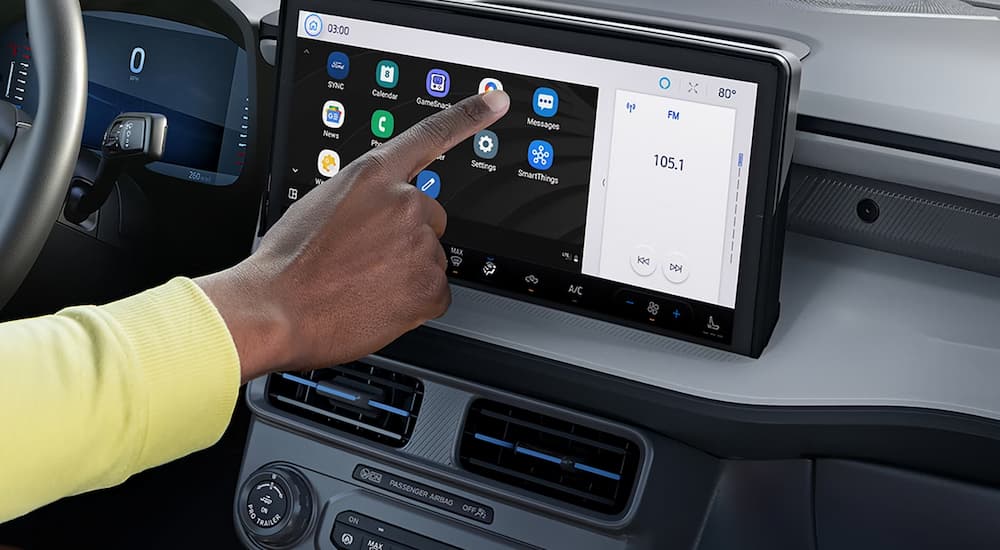
A great example is the 2026 Maverick’s straightforward infotainment system. Every trim comes with a 13.2-inch infotainment center complete with wireless Apple CarPlay and Android Auto smartphone integration that connects quickly and stays reliable, without any wires or proverbial strings attached.
Storage is handled thoughtfully as well. Everything from spacious console storage to map pockets, an optional toolbox swing case on either the driver or passenger side, and more is all placed with attentiveness. These small spaces are built into the cabin in ways that genuinely make sense, giving you places to keep everyday items without cluttering the main areas.
Comfort is another area where the Maverick quietly does its job. Seats are supportive enough for longer drives, and the overall layout doesn’t feel cramped, even though the truck itself is more compact than most. Although the XL and XLT come standard with a six-way manual driver’s seat and a four-way manual passenger’s seat, the Lobo, Lariat, and Tremor all come with an eight-way power-adjustable driver’s seat with complementary power-adjustable lumbar support, and a six-way manually-adjustable passenger’s seat is standard with these trims, too. Ultimately, the Maverick isn’t trying to impress you with flair. It’s just trying to make your life better and much more convenient.
Who the Maverick is Really For
You probably don’t need us to tell you that not every truck is built for every driver, but we’re here to tell you that the Maverick doesn’t try to be, and doesn’t need to, either. It tends to make the most sense for people who want flexibility without committing to something larger than necessary. That often includes first-time truck buyers who aren’t interested in jumping straight into a full-size model. Commuters are another group that naturally gravitate toward the Maverick, especially more than any other truck. The efficiency, manageable size, and ease of driving make it a practical option for daily use, especially if you regularly cover the same routes.
Some buyers are moving in the opposite direction, downsizing from a larger truck after realizing they don’t need as much capability as they once thought, or perhaps no longer need the extra size and strength. For them, the Maverick feels like a better fit without giving up the usefulness they’re used to. If you’re a newer truck driver or even entering your golden years and want a retirement truck, the Maverick is plenty of truck. Then some simply want something different from what they’re used to, a vehicle that doesn’t follow the usual expectations, but still works in the ways that matter. For them, the Maverick again comes out on top.

Where It Draws the Line
It’s worth being clear about what the Maverick isn’t designed to do, just to lay to rest any false expectations. If you regularly tow heavy loads or carry heavy loads, a full-size truck is still the better option. The Maverick doesn’t try to compete in that space, and it doesn’t need to.
That limitation isn’t a flaw. It’s part of what allows the Maverick to excel in other areas. By focusing on the needs of everyday drivers, it avoids becoming unnecessarily large or inefficient. It’s built with a specific purpose in mind, and it stays consistent with that purpose.
Why the 2026 Ford Maverick Continues to Stand Out
The 2026 Ford Maverick doesn’t stand out because it does more than every other truck on the market. It stands out because it does the right things for a specific kind of driver. It offers enough capability to be useful during the day, enough efficiency to be practical, and comfortable enough to make daily driving a breeze.
None of those qualities is pushed to an extreme, but together, they create something that works in a way most trucks don’t. For buyers who have been weighing their options and trying to figure out what actually fits their lifestyle, that balance tends to be the deciding factor. If that sounds like you, then the Maverick is the right choice.
